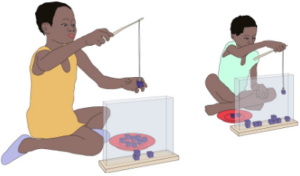
“Fair” does not always mean the same thing
These lesson materials introduce students to issues of fairness and various interpretations of it. Reflecting on results of a cross-cultural experiment with children, students discuss how we can use our understandings to create a more fair world.

A Teacher’s Guide to Evolution, Behavior, and Sustainability Science
Our interdisciplinary teacher’s guide outlines our educational design concept. It provides introductory readings around core concepts of human sciences and ideas for exploring them in the classroom.

Backwards Brain Bicycle
This video is about a bicycle that works differently than normal bicycles, and how challenging it is for our minds to learn how to ride this new bicycle.
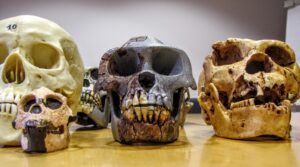
Brain size
Teaching resources and information about the evolution of human brain size
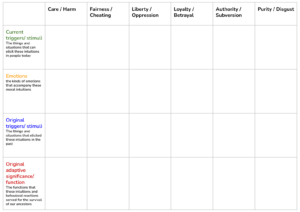
Causes of our moral intuitions
In this lesson students explore the causes of our moral intuitions with the help of a sorting activity and reflection questions.
Community Science Field Guide to School Culture
Schools are central social environments for young people to grow and develop themselves. How schools are governed, and which norms, values, and institutions get adopted, can all drive major life trajectories for how students think about their own learning and civic capacities and about the world they live in. This community science field guide provides supports for students around the world to investigate and strengthen the cooperation dynamics of their own school governance systems.
Creativity and flexibility
Human Evolution Resources Creativity and flexibility Many traits are strongly influenced by genetic inheritance. Through

Cultural evolution (lesson plan)
Students explore the concept of cultural evolution by comparing it to genetic evolution based on a number of concepts, and explore why cultural evolution is so important in our species.

DNA-V
Psychologists Louise Hayes and Joseph Ciarocchi have developed the DNA-V model. It contains the metaphors of the “Discoverer“, “Noticer“, “Advisor” and the “Valuer”, to help humans be aware of, make use of, and practice different skills towards valued living.
Embracing Complexity
A guide to exploring the mind in educational settings through evolutionary and behavioral science

Evolutionary Anthropology for interdisciplinary biology education – teaching materials collection
A collection of teaching materials for the book “Evolutionary Anthropology in interdisciplinary biology education”

Evolutionary Anthropology in the Primary School
Evolutionary Anthropology in the Primary School – a pre-service primary teacher module
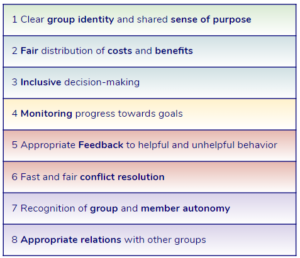
Exploring the Design Principles for Cooperation
Students explore the principles that allow groups to work together and achieve common goals, applying them to the groups that they are a part of or care about.
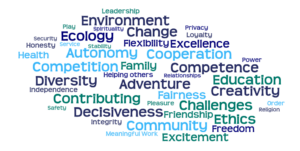
Exploring values
This lesson is about exploring the concept of values with students and having them identify and reflect on what they personally value, or what makes their life meaningful.
Fast and slow thinking
Teaching resources and information about the evolution of fast and slow thinking
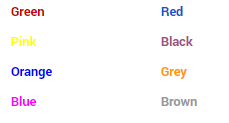
Fast thinking or slow thinking
In this lesson students sort their own experience of thinking into fast and slow processes. Based on this, they come to understand that our thinking is shaped through experience such that things we do often and regularly become easier over time.
Function of cognitive biases
In this lesson students learn about the concept of cognitive biases as well as a number of important cognitive biases that may affect our well-being and social interactions, identify their causes in evolutionary history, their functions, and reflect on how to cope with cognitive biases.
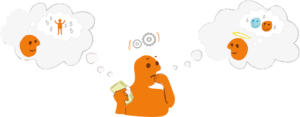
Game theory: Ultimatum and Dictator game
A set of behavioral experiments across cultures that explore the human sense of fairness.

Goals, Behaviors, and Outcomes
How can we understand the causal relationships between goals, behaviors, and outcomes?
Human Behavior & Sustainable Development
A lesson collection for the Human Behavior & Sustainable Development module.
Human evolution – Emotions
Teaching resourcen and information for exploring the evolution of emotions
Human evolution – Human needs, values, and wellbeing
Classroom resources for exploring (the evolution of) human needs, values, and well-being
Human evolution – Life with other groups
Teaching resources and information about the impact of intergroup cooperation and competition in human evolution
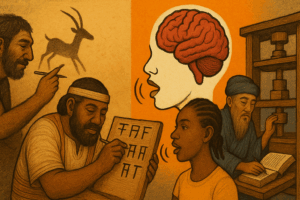
Human evolution – Symbols and language
Teaching resources and information about the evolution of human language and symbolic thinking
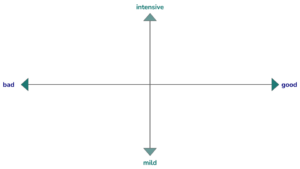
Interpreting emotions sorting activity (Slides)
In this activity students sort a range of examples of emotions into a matrix of good-bad and mild-intense. There are no right or wrong answers (or rather all answers are correct) since this is about their personal experience.
Mental Time Travel
Teaching resources and information about the evolution of our capacity for mental time travel
Mismatch
Teaching resources and information for learning about the concept of evolutionary mismatch in human behavior and its potential role in sustainable development
Mismatch? (lesson plan)
Students learn about the concept of evolutionary mismatch and apply it to various problems of sustainable development.
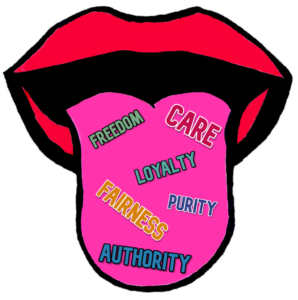
Moral intuitions
Teaching resources and information about the evolution of human morality
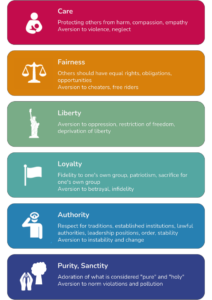
Moral intuitions handout
An overview of six important human moral intuitions
Moral taste buds
In this lesson students explore the causes and functions of, as well as ways to flexibly relate to our moral intuitions by engaging the analogy to our taste buds.
Noticing moral intuitions
Students identify the moral intuitions underlying people’s opinions in quoted texts and images.
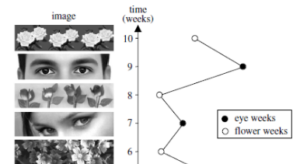
Perception of eyes and prosocial behavior
A behavioral experiment that tells us about the role of unconscious perception, particularly the perception of human eyes, on human social behavior.
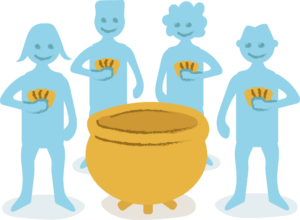
Public Goods Game
With these teaching materials, students can be introduced to game theory in general, as well as a concrete method, the public goods game. The conditions and rules of the public goods game reflect the challenge of a group to maintain common resources.
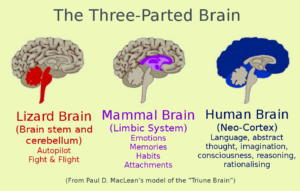
Reading text – brain areas and their functions
A handout about the “Triune Brain” model highlighting different functions of different brain regions
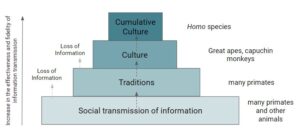
Reading text: Cumulative culture
A reading text about the importance of cumulative culture in our everyday experience and in the evolution of our species

Structure of Knowledge Diagrams
Simple diagrams can help us map and understand the structures of knowledge in our world.

The Decentralized Self
The human brain is the seat of human agency, and yet this agency is caused by cellular agents unaware of our larger human goals.
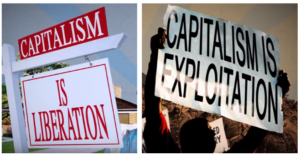
Two stories of capitalism
Students explore two contrasting stories about the benefits and failures of capitalism, identify the moral intuitions behind each story, and write a third story about capitalism that integrates aspects of both stories.
Values domains sorting activity
This activity lets students explore the six different values domains by considering why we humans might have evolved to find these areas of life meaningful and important, and what kinds of different things we can do to live towards these valued domains.

What Kind of Mind?
‘What Kind of Mind?’ provides teaching resources to introduce pupils to research ideas about animal minds.