
A Teacher’s Guide to Evolution, Behavior, and Sustainability Science
Our interdisciplinary teacher’s guide outlines our educational design concept. It provides introductory readings around core concepts of human sciences and ideas for exploring them in the classroom.
Evolution, Cooperation, and Sustainability
A lesson collection on evolution, cooperation, and sustainability
Human Behavior & Sustainable Development
A lesson collection for the Human Behavior & Sustainable Development module.
NetLogo Collection
The OpenEvo Collection of NetLogo Agent-Based Models
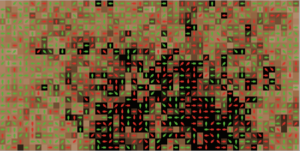
NetLogo Model: Evolution and competition for resources (abstract)
This NetLogo model lets students explore how competition for resources can affect the evolution of a population and can result in resource overuse. This model is similar to the Evolution and competition for forest resources model, but more abstract.

NetLogo: Bug evolution
This model allows students to investigate the evolution of running speed in a beetle population.
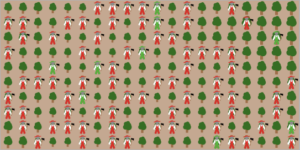
NetLogo: Evolution and competition for forest resources
This NetLogo model builds on the model of Two Foresters. In this model, agents reproduce based on the amount of resources that they harvest.

NetLogo: Evolution of ethnocentrism
This model simulates the biological evolution of ethnocentrism in a population made up of multiple ethnicities.

NetLogo: Evolution of resource use and social behavior (monitoring and punishment)
This model lets us explore how the appearance of certain social behaviors can affect evolutionary population dynamics.
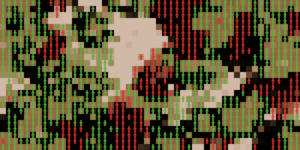
NetLogo: Evolution of resource use through behavior imitation
This model adds cultural evolutionary dynamics through behavior imitation to the evolution of resource use behavior.

NetLogo: Evolution of resource use with harvest efficiency
This model introduces the concept of resource use efficiency into the evolution of resource use behavior.

NetLogo: Island World
This model simulates the evolution of populations in an environment that is spatially structured. In such a situation, several evolutionary mechanisms operate, including migration, founder effect, multilevel selection.

NetLogo: Population size and living costs
This model allows students to explore the relationships between population size, resource growth rates, cost of living, and resource use rates.

NetLogo: Swarming
The model simulates the emergence of swarms, flocks, or schools in certain animal species such as birds and fish through simple behaviors of individuals.

NetLogo: Two communities
This NetLogo computer model extends the model Two Foresters and introduces a bigger and more complex population structure

NetLogo: Two Foresters
An interactive introduction into concepts of ecology, behavioral ecology, and sustainability with a computer simulation of a simple social-ecological system.

NetLogo: Virus epidemic
The model simulates the spread of a viral infection within a population.
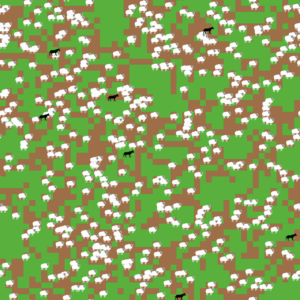
NetLogo: Wolves-Sheep-Grass
A model of a predator-prey system
Self-study module: Computer simulations on evolution and sustainability
A self-study module on the OpenEvo learning hub on teaching about the evolution of sustainable resource with NetLogo computer simulations

Semantic spaces
As part of our Computational Curriculum Studies (CCS) project, we are working to develop methodologies related to the analysis of curriculum policy texts as semantic spaces – spaces of related meaning – that can be analyzed computationally to reveal opportunities and challenges for interdisciplinary and locally relevant curriculum design processes.