

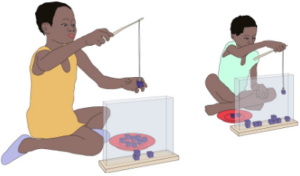
“Fair” does not always mean the same thing
These lesson materials introduce students to issues of fairness and various interpretations of it. Reflecting on results of a cross-cultural experiment with children, students discuss how we can use our understandings to create a more fair world.

A Teacher’s Guide to Evolution, Behavior, and Sustainability Science
Our interdisciplinary teacher’s guide outlines our educational design concept. It provides introductory readings around core concepts of human sciences and ideas for exploring them in the classroom.
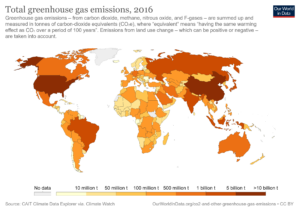
Climate Change Game
A cooperation game that lets students experience some of the challenges of cooperation in addressing global climate change
Collective Action Puzzle Game
A group game that lets students experience the dilemma between self-interest and collective interest when groups have to work together to achieve shared goals.

Commons game
In a classroom simulation game with changing conditions students develop strategies for the use of a common resource so that the profit for the entire group is maximized.
Community Science Field Guide to School Culture
Schools are central social environments for young people to grow and develop themselves. How schools are governed, and which norms, values, and institutions get adopted, can all drive major life trajectories for how students think about their own learning and civic capacities and about the world they live in. This community science field guide provides supports for students around the world to investigate and strengthen the cooperation dynamics of their own school governance systems.
Evolution, Cooperation, and Sustainability
A lesson collection on evolution, cooperation, and sustainability

Evolutionary Anthropology for interdisciplinary biology education – teaching materials collection
A collection of teaching materials for the book “Evolutionary Anthropology in interdisciplinary biology education”

Evolutionary Anthropology in the Primary School
Evolutionary Anthropology in the Primary School – a pre-service primary teacher module

Game theory: Ultimatum and Dictator game
A set of behavioral experiments across cultures that explore the human sense of fairness.
Human Behavior & Sustainable Development
A lesson collection for the Human Behavior & Sustainable Development module.

Introduction to social dilemmas and the payoff matrix
Students reflect on the causes and consequences of human behaviors in situations of social interactions, and are introduced to the payoff matrix as a helpful tool to represent motivations and outcomes of behaviors.

Lost wallet study
A behavioral experiment across 40 countries that explored human motivations to return lost wallets to their owner

Payoff matrices
Payoff matrices can help us analyze the behavioral strategies and possible outcomes in diverse situations across biology and society.
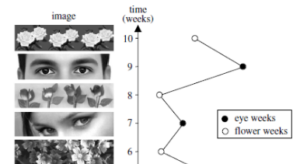
Perception of eyes and prosocial behavior
A behavioral experiment that tells us about the role of unconscious perception, particularly the perception of human eyes, on human social behavior.
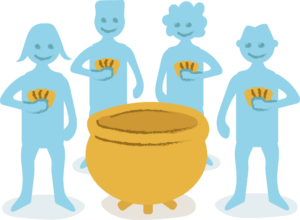
Public Goods Game
With these teaching materials, students can be introduced to game theory in general, as well as a concrete method, the public goods game. The conditions and rules of the public goods game reflect the challenge of a group to maintain common resources.
Stone Age Hunting Game
A cooperation game that simulates the challenge of our stone age ancestors to acquire food in the African savanna