

A Teacher’s Guide to Evolution, Behavior, and Sustainability Science
Our interdisciplinary teacher’s guide outlines our educational design concept. It provides introductory readings around core concepts of human sciences and ideas for exploring them in the classroom.
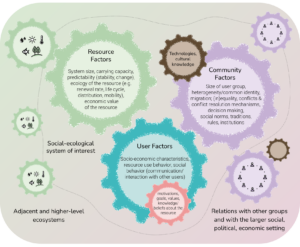
Analyzing social-ecological systems
In this lesson, students analyze a select real-world social-ecological system by looking at factors of the resource(s) and ecosystem, resource user behaviors, and governance, to develop recommendations for improving the sustainable management of the resource.
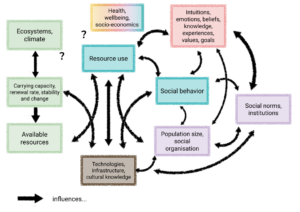
Causal mapping pieces for causal relationships in the present and future
Materials for creating a causal map on the relationships between human behaviors, technologies, institutions, social and natural environments
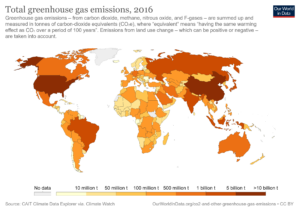
Climate Change Game
A cooperation game that lets students experience some of the challenges of cooperation in addressing global climate change
Commons game
In a classroom simulation game with changing conditions students develop strategies for the use of a common resource so that the profit for the entire group is maximized.
Community Science Field Guide to School Culture
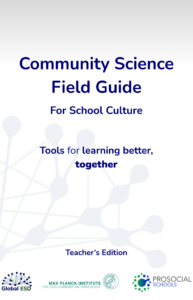
Schools are central social environments for young people to grow and develop themselves. How schools are governed, and which norms, values, and institutions get adopted, can all drive major life trajectories for how students think about their own learning and civic capacities and about the world they live in. This community science field guide provides supports for students around the world to investigate and strengthen the cooperation dynamics of their own school governance systems.
Connecting Past, Present, and Future
A collection of materials for connecting past human evolution to the present and the future. Students explore global trends and relationships between human behavior, technologies, social organization, environment, and well-being.

Connecting the past, present, and future – Social (in)equality
Information about the causes and consequences of social inquality
Connecting the past, present, and future – Democracy
Information about the history of democracy
Connecting the past, present, and future – Education
Information about the history of education
Connecting the past, present, and future – Food production
Information about the history and current challenges of food production
Connecting the past, present, and future – Impacts on the Environment
Information about the development of human impacts on the environment
Connecting the past, present, and future – Living standards
Information about the development of living standards in our species
Connecting the past, present, and future – Resource use
Information about the history and challenges of resource use in our species
Connecting the past, present, and future – Social networking
Information about the history and importance of social networking in our species
Connecting the past, present, and future – Spread of innovations
Information about the evolution and spread of innovations
Connecting the past, present, and future – Technologies
Information about the history and future of technologies
Evolution, Cooperation, and Sustainability
A lesson collection on evolution, cooperation, and sustainability
Exploring the Design Principles for Cooperation
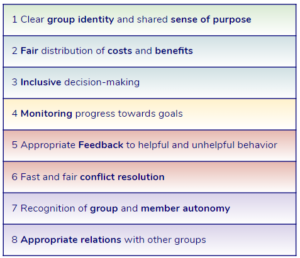
Students explore the principles that allow groups to work together and achieve common goals, applying them to the groups that they are a part of or care about.
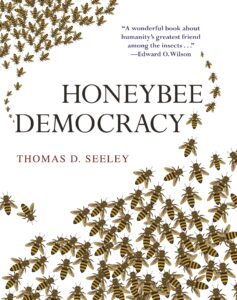
Honeybee Democracy
Students explore how a honeybee swarm makes a decision about their future nesting site, and explore the similarities and differences to how human groups make decisions.
Human Behavior & Sustainable Development
A lesson collection for the Human Behavior & Sustainable Development module.
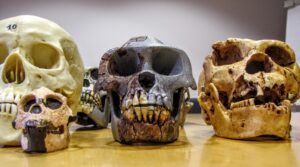
Human evolution – Human needs, values, and wellbeing
Classroom resources for exploring (the evolution of) human needs, values, and well-being

Interdisciplinary Structures of Knowledge
As part of our Computational Curriculum Studies (CCS) project, we are working to develop methodologies related to the analysis of curriculum policy texts as interdisciplinary structures of knowledge that can be productively analyzed using computational methods.
Mismatch
Teaching resources and information for learning about the concept of evolutionary mismatch in human behavior and its potential role in sustainable development
Mismatch? (lesson plan)
Students learn about the concept of evolutionary mismatch and apply it to various problems of sustainable development.

NetLogo: Population size and living costs
This model allows students to explore the relationships between population size, resource growth rates, cost of living, and resource use rates.

Payoff matrices
Payoff matrices can help us analyze the behavioral strategies and possible outcomes in diverse situations across biology and society.

Semantic spaces
As part of our Computational Curriculum Studies (CCS) project, we are working to develop methodologies related to the analysis of curriculum policy texts as semantic spaces – spaces of related meaning – that can be analyzed computationally to reveal opportunities and challenges for interdisciplinary and locally relevant curriculum design processes.
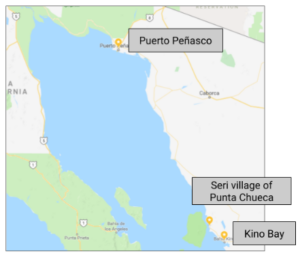
Three Mexican fisheries
Students compare the stories of three Mexican fishing villages to understand the factors that enabled some villages to sustainably manage their fishing resources, while others failed.
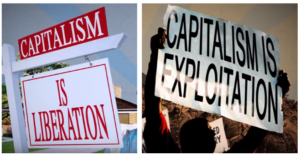
Two stories of capitalism
Students explore two contrasting stories about the benefits and failures of capitalism, identify the moral intuitions behind each story, and write a third story about capitalism that integrates aspects of both stories.
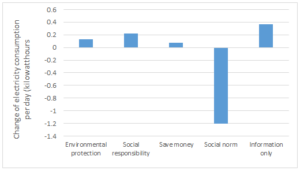
What motivates people to save energy
A set of behavioral experiments to find out what motivates people to save electricity, exploring the roles of monetary incentives, social norms, appeals to the environment or to citizenship.