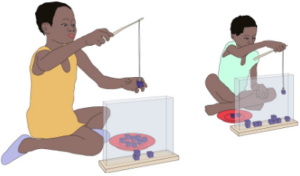
“Fair” does not always mean the same thing
These lesson materials introduce students to issues of fairness and various interpretations of it. Reflecting on results of a cross-cultural experiment with children, students discuss how we can use our understandings to create a more fair world.

A Teacher’s Guide to Evolution, Behavior, and Sustainability Science
Our interdisciplinary teacher’s guide outlines our educational design concept. It provides introductory readings around core concepts of human sciences and ideas for exploring them in the classroom.
Born good? Babies help unlock the origins of morality
Can infants already distinguish between what is morally right and wrong? This video explores experiments with babies to answer these questions.
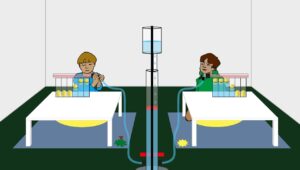
Chimps or children – who is better at sharing resources?
A comparative behavioral research experiment exploring the abilities of chimpanzees and of children to cooperate around a shared resource.
Community Science Field Guide to School Culture
Schools are central social environments for young people to grow and develop themselves. How schools are governed, and which norms, values, and institutions get adopted, can all drive major life trajectories for how students think about their own learning and civic capacities and about the world they live in. This community science field guide provides supports for students around the world to investigate and strengthen the cooperation dynamics of their own school governance systems.
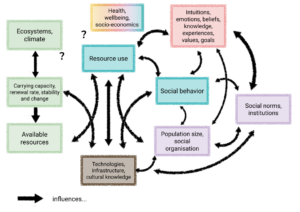
Connecting the past, present, and future – Education
Information about the history of education
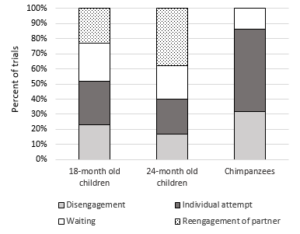
Cooperative activities with children and chimpanzees
A series of experiments with small children and chimpanzees to investigate their ability and motivation to engage in collaborative activities

DNA-V
Psychologists Louise Hayes and Joseph Ciarocchi have developed the DNA-V model. It contains the metaphors of the “Discoverer“, “Noticer“, “Advisor” and the “Valuer”, to help humans be aware of, make use of, and practice different skills towards valued living.
Evolution, Cooperation, and Sustainability
A lesson collection on evolution, cooperation, and sustainability

Evolutionary Anthropology for interdisciplinary biology education – teaching materials collection
A collection of teaching materials for the book “Evolutionary Anthropology in interdisciplinary biology education”

Evolutionary Anthropology in the Primary School
Evolutionary Anthropology in the Primary School – a pre-service primary teacher module
Human Behavior & Sustainable Development
A lesson collection for the Human Behavior & Sustainable Development module.
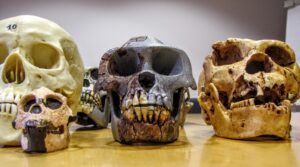
Human evolution – Gesturing and shared attention
Teaching resources and information about the evolution and significance of gesturing and shared attention in our species
Human evolution – Human needs, values, and wellbeing
Classroom resources for exploring (the evolution of) human needs, values, and well-being

Imitation in chimps and children (Video, Experiment)
A series of experiments to explore the tendency to imitate in children and chimpanzees
Lesson plan: Evolution and development of upright walking
This document contains a collection of activities and resources related to the evolution and development of upright walking in our species
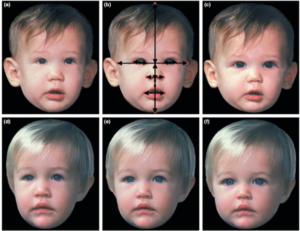
Reading text – Baby schema
A reading text on the evolution of the baby schema together with cooperative child care
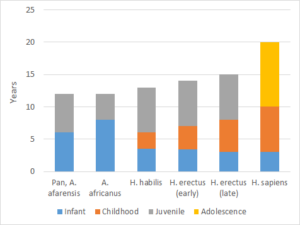
Reading text – Evolution of childhood
A reading text and causal mapping tasks on the (co)evolution of brain size, childhood, premature birth, cooperative childcare and social learning and teaching
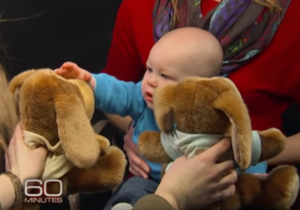
Video, Worksheets: Experiments on the social behavior of babies
Using puppets psychologists explore what small children as young as a few months old think about their social environment and whether they can distinguish between “good” and “bad”.