Understanding how knowledge is organized can impact how we organize the curriculum
Our OpenEvo educational design concept represents a unique view on the structures of knowledge across the many domains of understanding humans.
In Computational Curriculum Studies (CCS), a central aim is to map, model, and design deeper conceptual structures of knowledge embedded within and between subject areas, topics, and grade-levels. Explore the methods and projects below that help us identify bridges and opportunities for empowering all learners to develop valued understandings of themselves, and the worlds we are collectively shaping.
Network graph methods
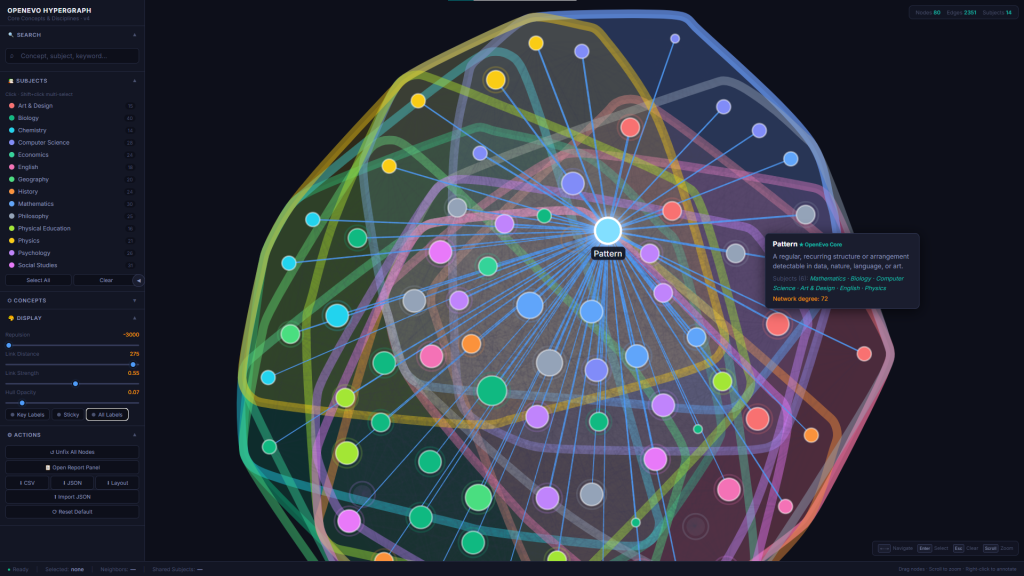
We are working to help educational researchers, policy makers, and practioners to better reflect on and improve the underlying structures of knowledge entailed in the organization of school subject areas and interdisciplinary connections represented in curriculum policy. The prototype web app to the right presents a visual demonstration of tools we are exploring to empower education stakeholders in these directions.
Our OpenEvo TeachingBase materials are organized as an interactive network graph.
Semantic modeling methods
We are working to develop methodologies related to the analysis of curriculum policy texts as semantic spaces – spaces of related meaning – that can be analyzed computationally to reveal opportunities and challenges for interdisciplinary and locally relevant curriculum design processes.
We are working to apply the methods above in the context international curriculum analyses, starting with German and USA contexts. Contact us if you are interested to advance CCS research in your regional context.