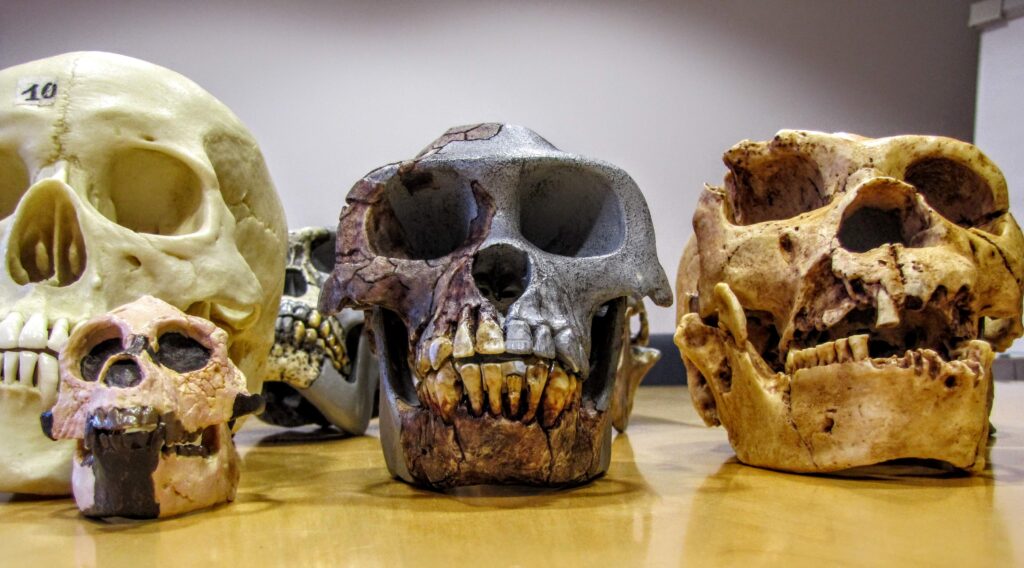
Mental Time Travel
Teaching resources and information about the evolution of our capacity for mental time travel
Mental Time Travel Read More »
Future Thinking
Teaching resources and information about the evolution of our capacity for mental time travel
Mental Time Travel Read More »
Information about the history and challenges of resource use in our species
Connecting the past, present, and future – Resource use Read More »
Information about the development of living standards in our species
Connecting the past, present, and future – Living standards Read More »
Information about the evolution and spread of innovations
Connecting the past, present, and future – Spread of innovations Read More »
Information about the history and importance of social networking in our species
Connecting the past, present, and future – Social networking Read More »
Information about the history and future of technologies
Connecting the past, present, and future – Technologies Read More »
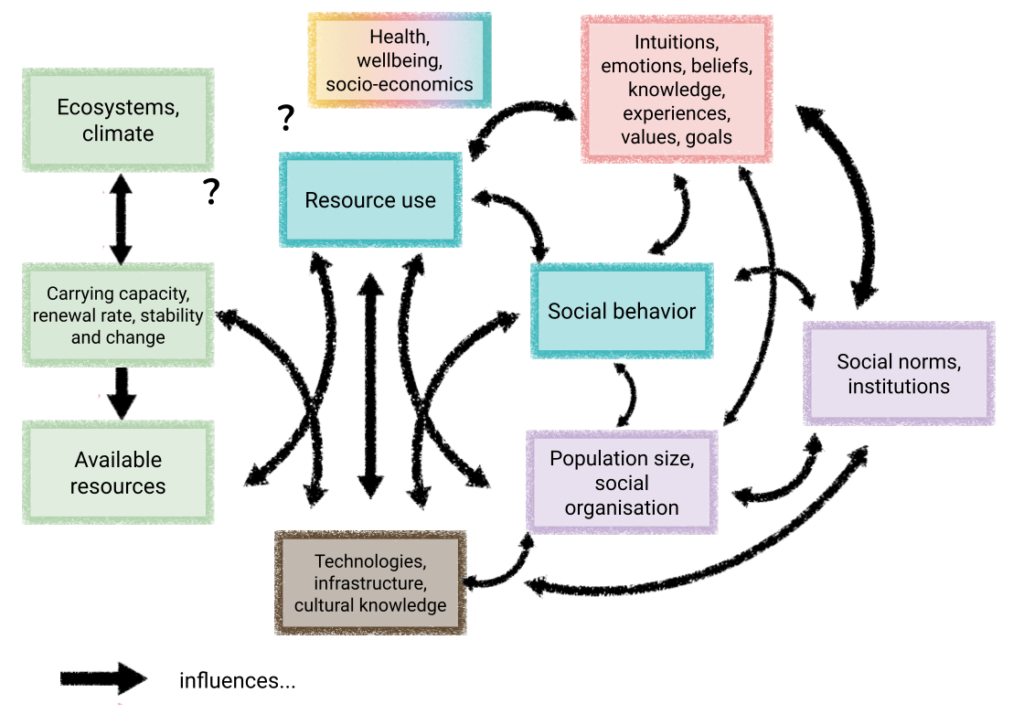
Materials for creating a causal map on the relationships between human behaviors, technologies, institutions, social and natural environments
Causal mapping pieces for causal relationships in the present and future Read More »
A collection of materials for connecting past human evolution to the present and the future. Students explore global trends and relationships between human behavior, technologies, social organization, environment, and well-being.
Connecting Past, Present, and Future Read More »
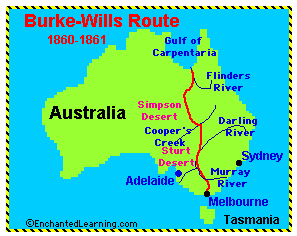
Stories of lost explorers that tell us about the importance of cultural knowledge to our survival.
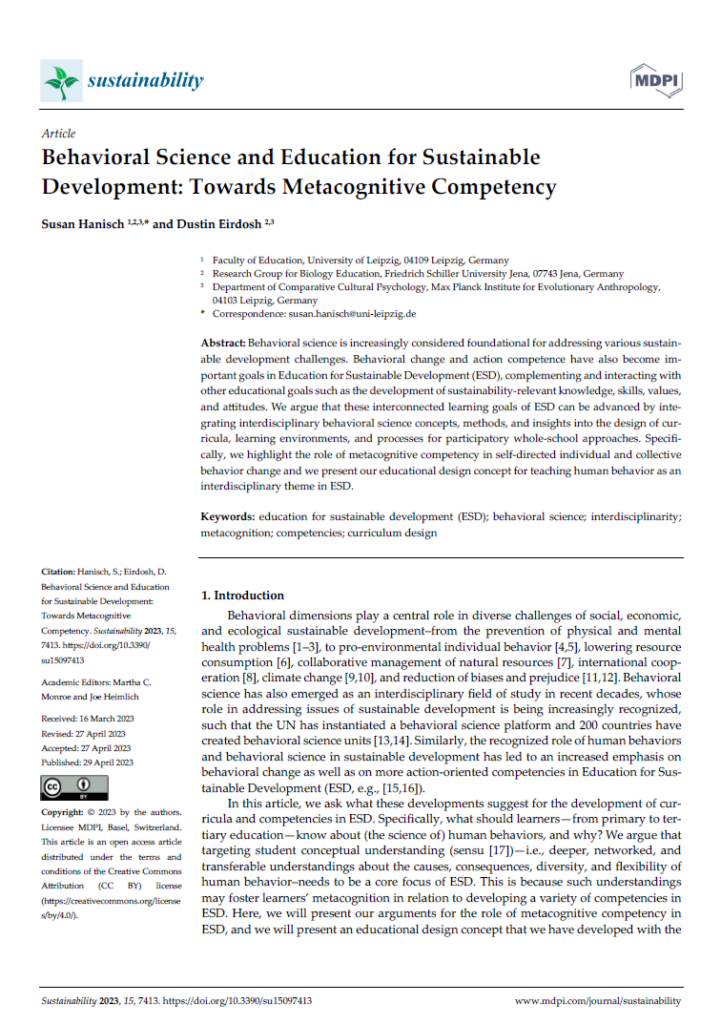
Behavioral science is increasingly considered foundational for addressing various sustainable development challenges. Behavioral change and action competence have also become important goals in Education for Sustainable Development (ESD), complementing and interacting with other educational goals such as the development of sustainability-relevant knowledge, skills, values, and attitudes. We argue that these interconnected learning goals of ESD can be advanced by integrating interdisciplinary behavioral science concepts, methods, and insights into the design of curricula, learning environments, and processes for participatory whole-school approaches. Specifically, we highlight the role of metacognitive competency in self-directed individual and collective behavior change and we present our educational design concept for teaching human behavior as an interdisciplinary theme in ESD.