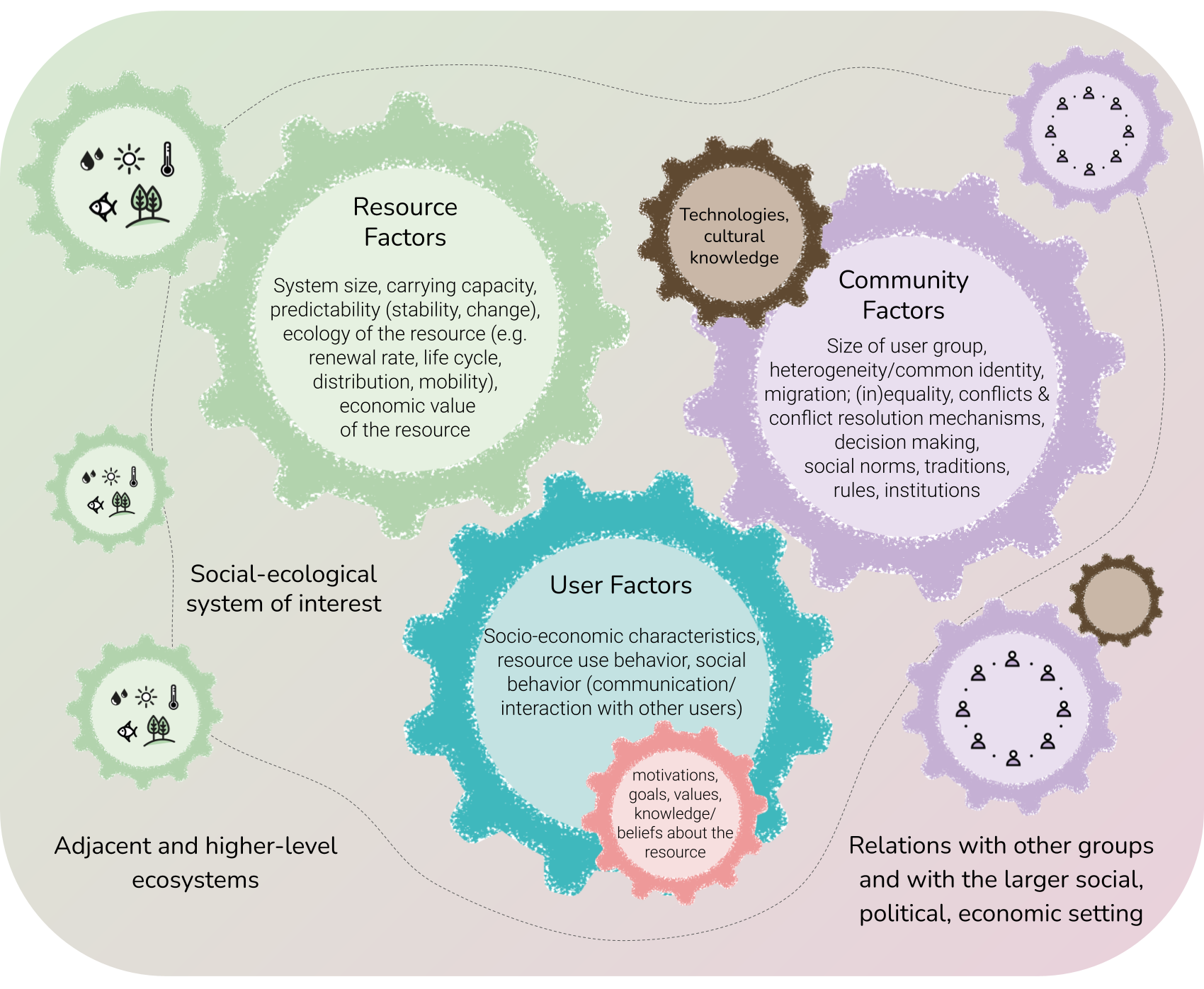
In this lesson, students analyze a select real-world social-ecological system by looking at factors of the resource(s) and ecosystem, resource user behaviors, and governance,
Using an analogy of epi-genetic expression in relation to the cultural genome of the school curriculum, educators and school stakeholders (including students) may explore
Humans across cultures and from early in childhood display a diversity of often strong moral beleifs and related actions in the world. Understanding the
Our interdisciplinary teacher’s guide outlines our educational design concept. It provides introductory readings around core concepts of human sciences and ideas for exploring them
An educational project for the development and evaluation of computer simulations and digital teaching resources supported by the Joachim Herz Foundation