
Hanisch, S. (2026). Evolutionary Anthropology for Interdisciplinary Biology Education. Springer
…

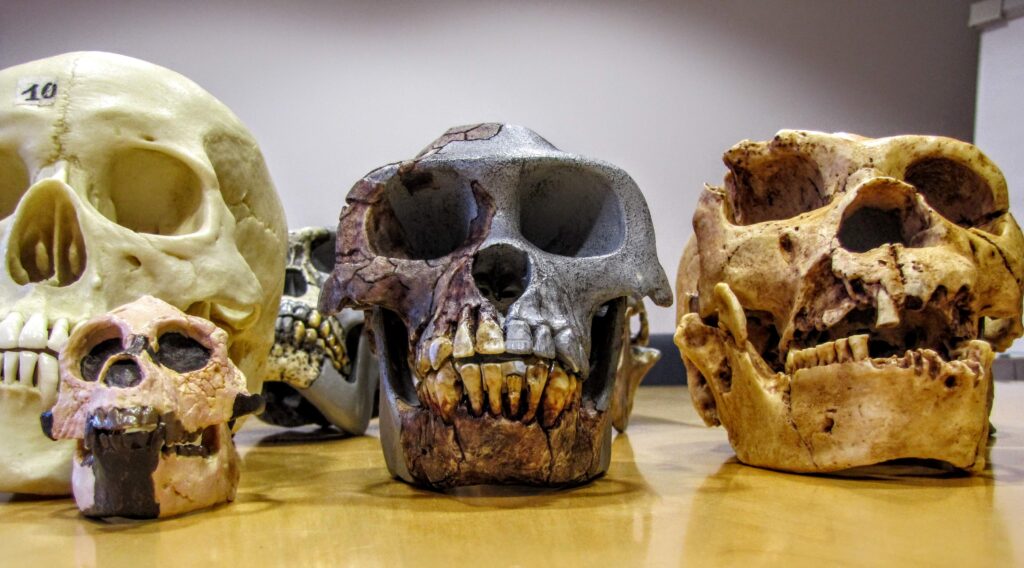
Teaching resources and information about the evolution of fast and slow thinking
Fast and slow thinking Read More »
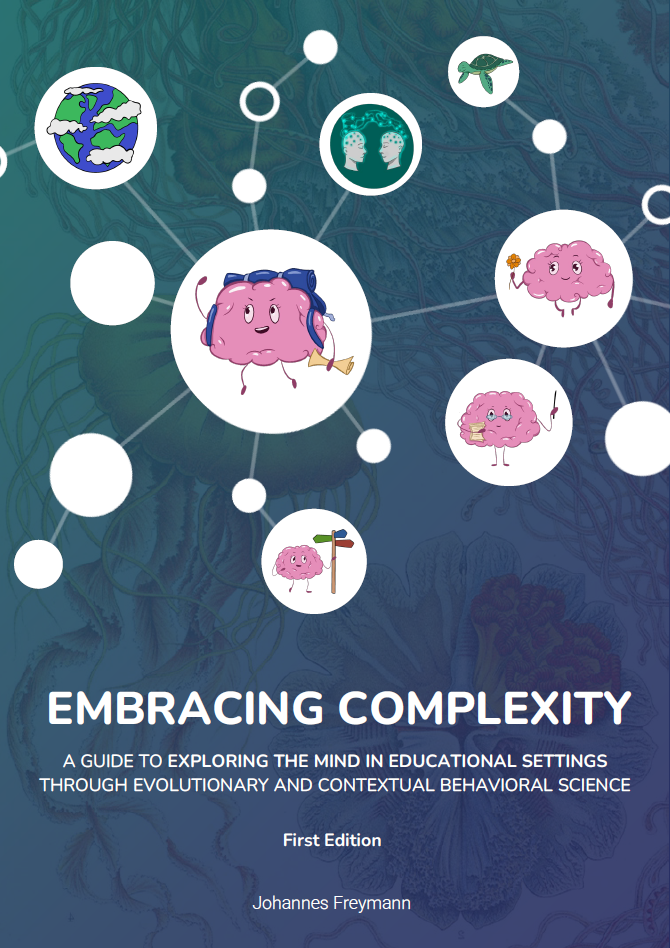
A guide to exploring the mind in educational settings through evolutionary and behavioral science
Embracing Complexity Read More »

Psychologists Louise Hayes and Joseph Ciarocchi have developed the DNA-V model. It contains the metaphors of the “Discoverer“, “Noticer“, “Advisor” and the “Valuer”, to help humans be aware of, make use of, and practice different skills towards valued living.
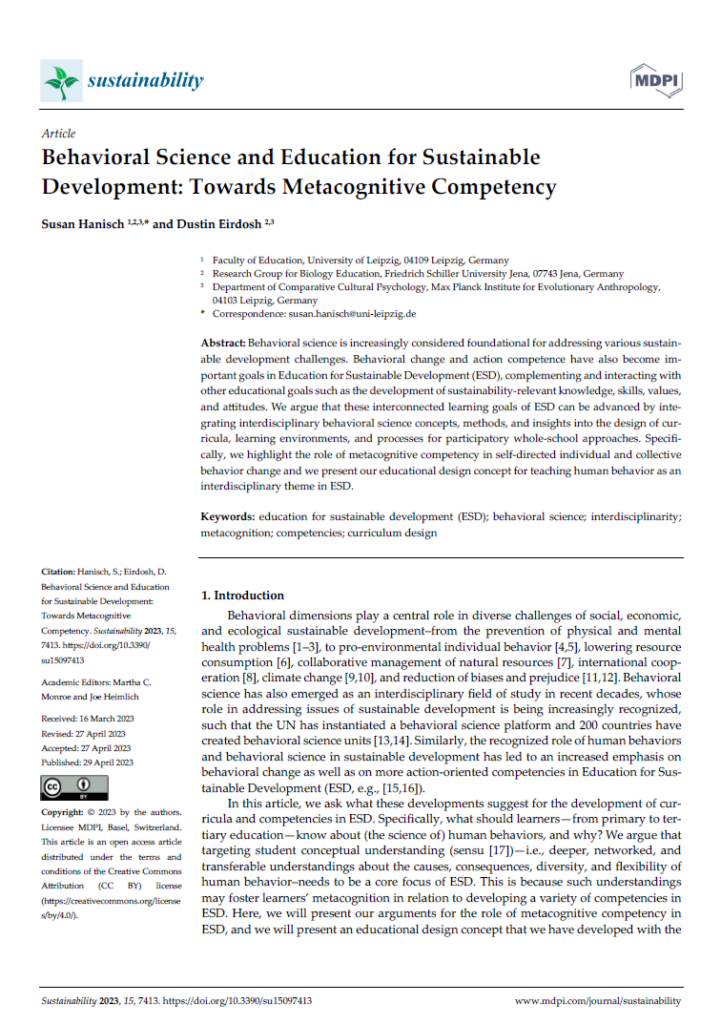
Behavioral science is increasingly considered foundational for addressing various sustainable development challenges. Behavioral change and action competence have also become important goals in Education for Sustainable Development (ESD), complementing and interacting with other educational goals such as the development of sustainability-relevant knowledge, skills, values, and attitudes. We argue that these interconnected learning goals of ESD can be advanced by integrating interdisciplinary behavioral science concepts, methods, and insights into the design of curricula, learning environments, and processes for participatory whole-school approaches. Specifically, we highlight the role of metacognitive competency in self-directed individual and collective behavior change and we present our educational design concept for teaching human behavior as an interdisciplinary theme in ESD.

ACT for Education – Dive Into a Process-Based Tool to Help Students Learn to Be Flexible, Safe, and Engaged in Learning
Evolving Solutions Read More »
DNA-V is an evidence-based model that promotes psychological strength, and that values consistent living, vitality, and success. It is designed to help people cope with challenges, stress, and change. DNA-V can be thought of as a combination of Acceptance and Commitment Therapy (ACT) and positive psychology, and is underpinned by contextual behavioural science. The model is continually being updated as new evidence comes in.
DNA-V International Read More »
