What can we learn from children about human evolution, behavior, and sustainability? The development of social and cognitive abilities in the course of a
Content Anchor: Child Development
Schools are central social environments for young people to grow and develop themselves. How schools are governed, and which norms, values, and institutions get
Teaching resources and information about the evolution and significance of gesturing and shared attention in our species
Can infants already distinguish between what is morally right and wrong? This video explores experiments with babies to answer these questions.
When people must share things, what does it mean to share fairly? Do all people around the world have the same idea of what
We present a teaching tool, used widely in other parts of science and science education, yet perhaps underutilized in human evolution education—the causal map—as
Evolutionary anthropologists commonly describe humans as a highly cooperative species, based on our evolved socio-cognitive capacities. However, students and the general public may not
These lesson materials introduce students to issues of fairness and various interpretations of it. Reflecting on results of a cross-cultural experiment with children, students
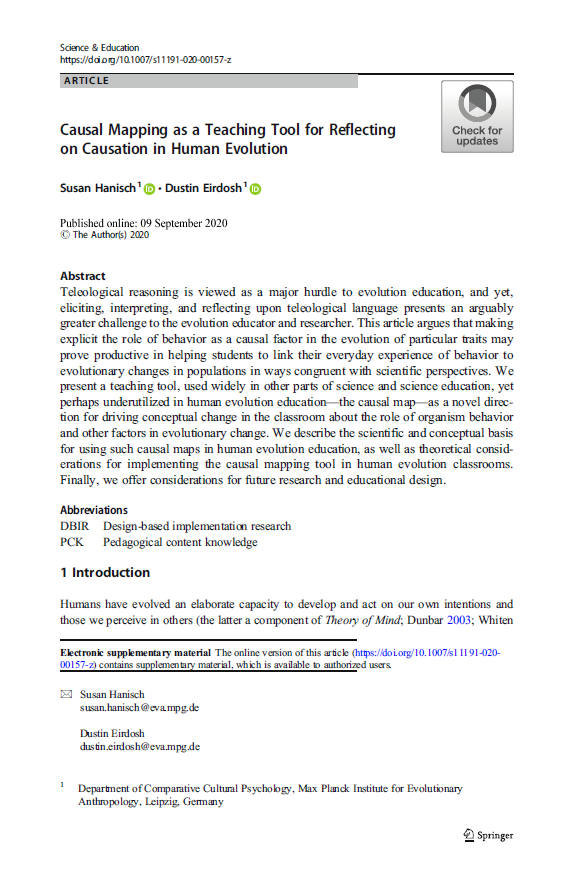
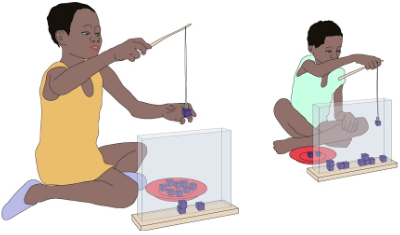
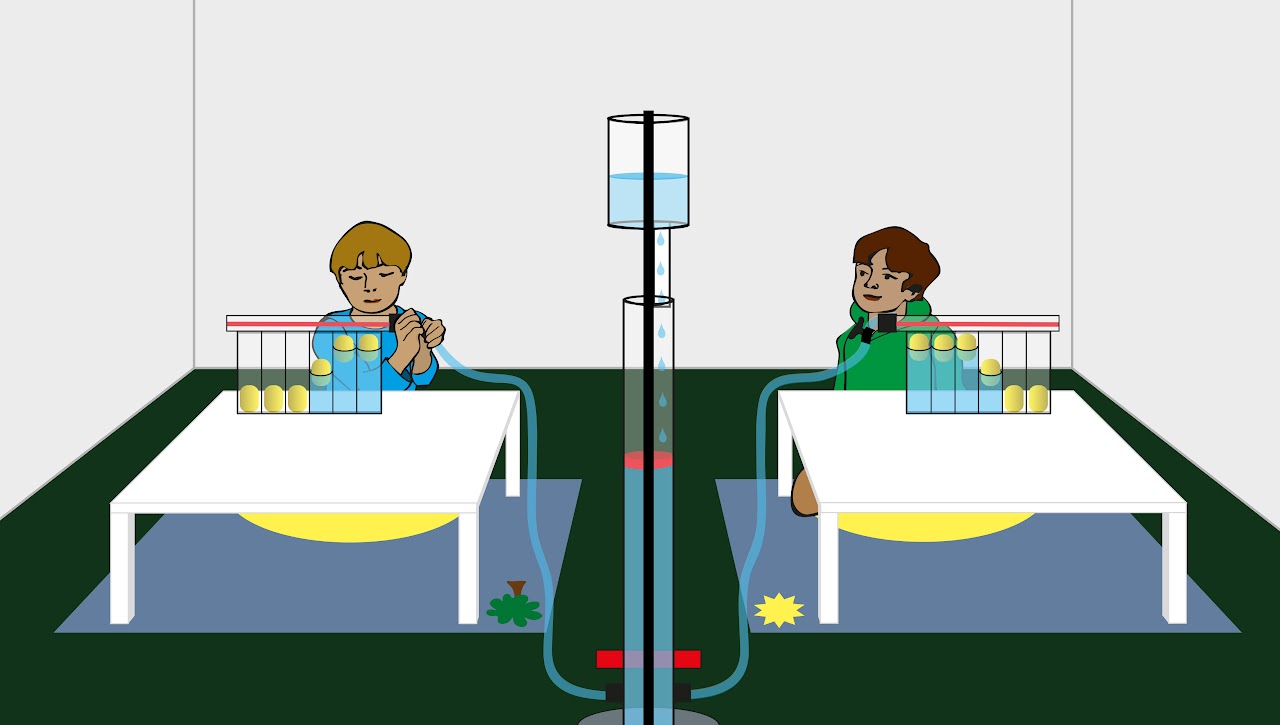
A comparative behavioral research experiment exploring the abilities of chimpanzees and of children to cooperate around a shared resource.
Distributing the spoils of a joint enterprise on the basis of work contribution or relative productivity seems natural to the modern Western mind. But