
NetLogo: Swarming
The model simulates the emergence of swarms, flocks, or schools in certain animal species such as birds and fish through simple behaviors of individuals.

The model simulates the emergence of swarms, flocks, or schools in certain animal species such as birds and fish through simple behaviors of individuals.
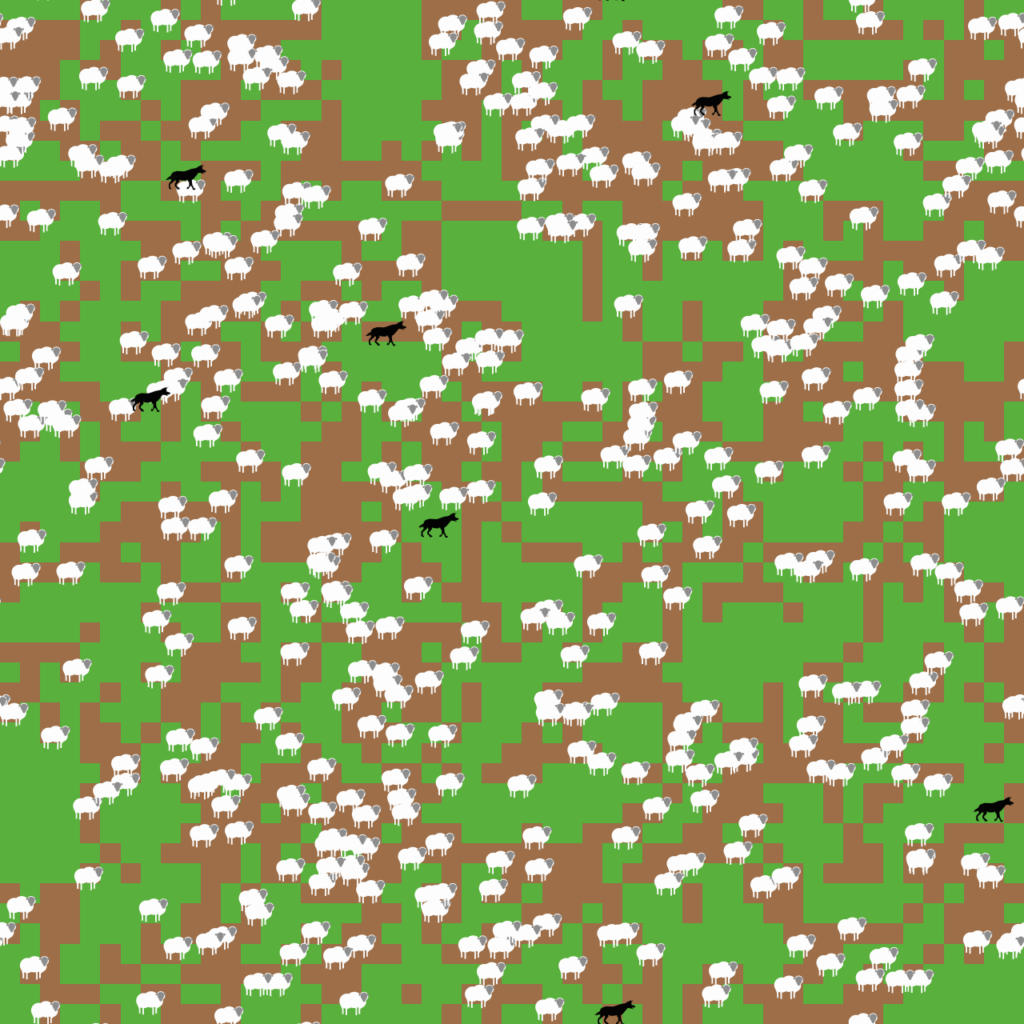
A model of a predator-prey system
NetLogo: Wolves-Sheep-Grass Read More »
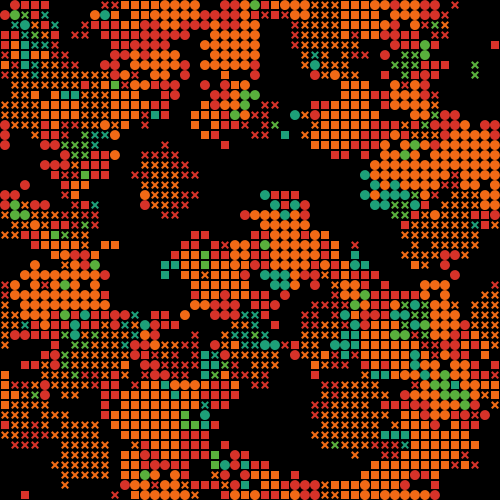
This model simulates the biological evolution of ethnocentrism in a population made up of multiple ethnicities.
NetLogo: Evolution of ethnocentrism Read More »
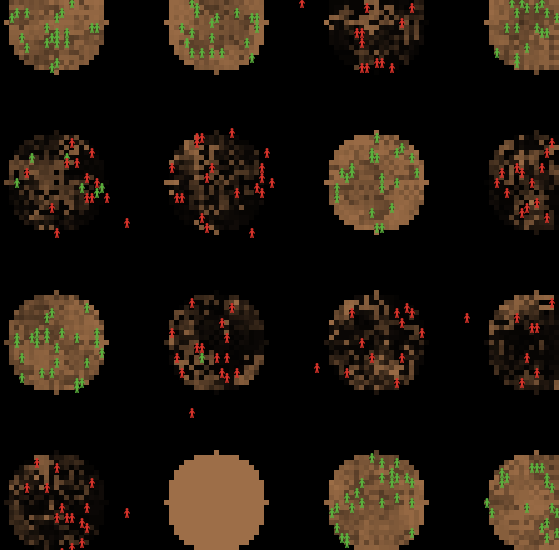
This model simulates the evolution of populations in an environment that is spatially structured. In such a situation, several evolutionary mechanisms operate, including migration, founder effect, multilevel selection.
NetLogo: Island World Read More »
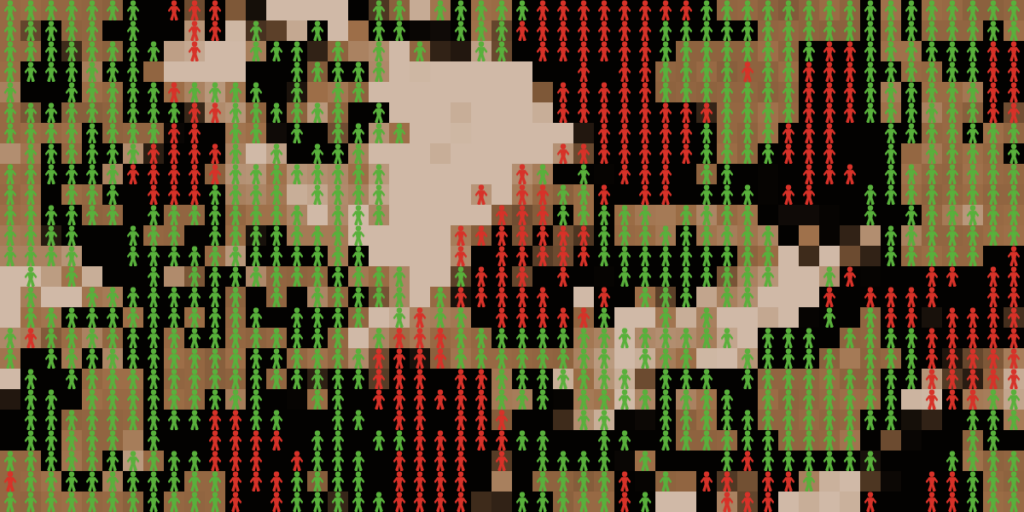
This model adds cultural evolutionary dynamics through behavior imitation to the evolution of resource use behavior.
NetLogo: Evolution of resource use through behavior imitation Read More »
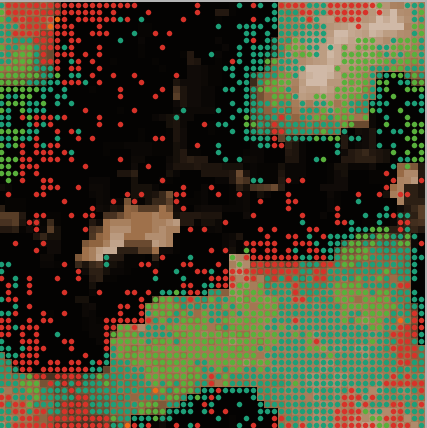
This model lets us explore how the appearance of certain social behaviors can affect evolutionary population dynamics.
NetLogo: Evolution of resource use and social behavior (monitoring and punishment) Read More »
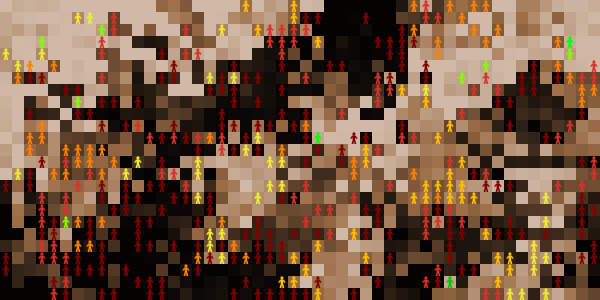
This model introduces the concept of resource use efficiency into the evolution of resource use behavior.
NetLogo: Evolution of resource use with harvest efficiency Read More »
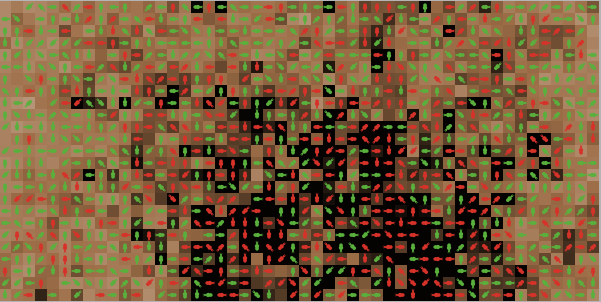
This NetLogo model lets students explore how competition for resources can affect the evolution of a population and can result in resource overuse. This model is similar to the Evolution and competition for forest resources model, but more abstract.
NetLogo Model: Evolution and competition for resources (abstract) Read More »
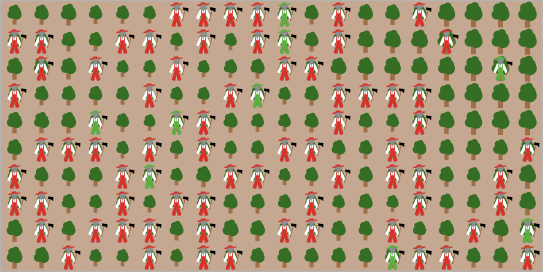
This NetLogo model builds on the model of Two Foresters. In this model, agents reproduce based on the amount of resources that they harvest.
NetLogo: Evolution and competition for forest resources Read More »
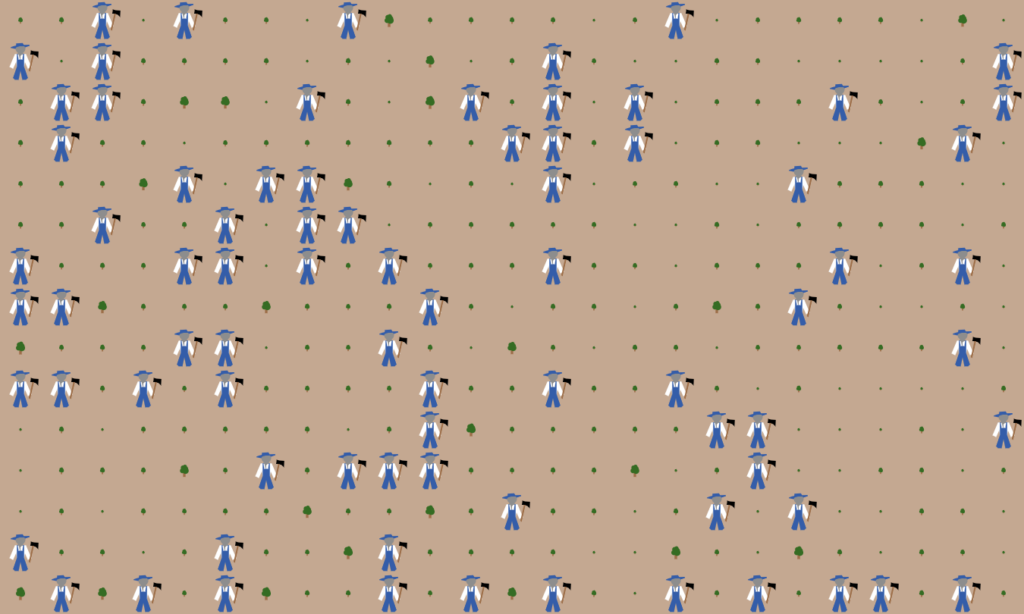
This model allows students to explore the relationships between population size, resource growth rates, cost of living, and resource use rates.
NetLogo: Population size and living costs Read More »