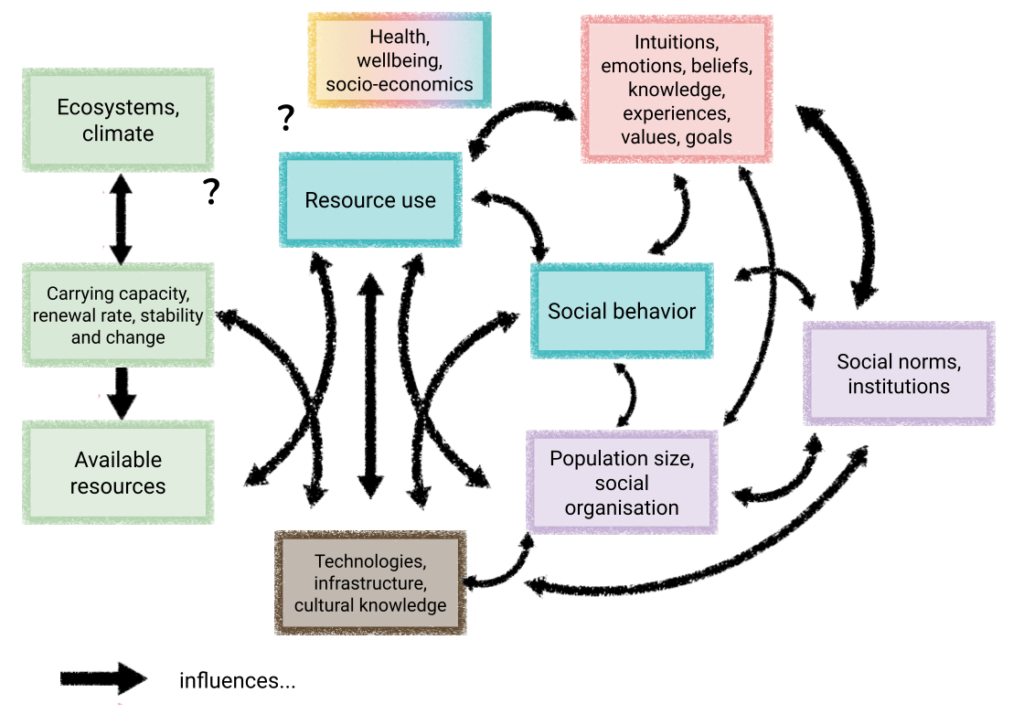
Connecting the past, present, and future – Impacts on the Environment
Information about the development of human impacts on the environment
Connecting the past, present, and future – Impacts on the Environment Read More »

Information about the development of human impacts on the environment
Connecting the past, present, and future – Impacts on the Environment Read More »
Information about the history and challenges of resource use in our species
Connecting the past, present, and future – Resource use Read More »
Information about the evolution and spread of innovations
Connecting the past, present, and future – Spread of innovations Read More »

Teaching resources and information for learning about the concept of evolutionary mismatch in human behavior and its potential role in sustainable development
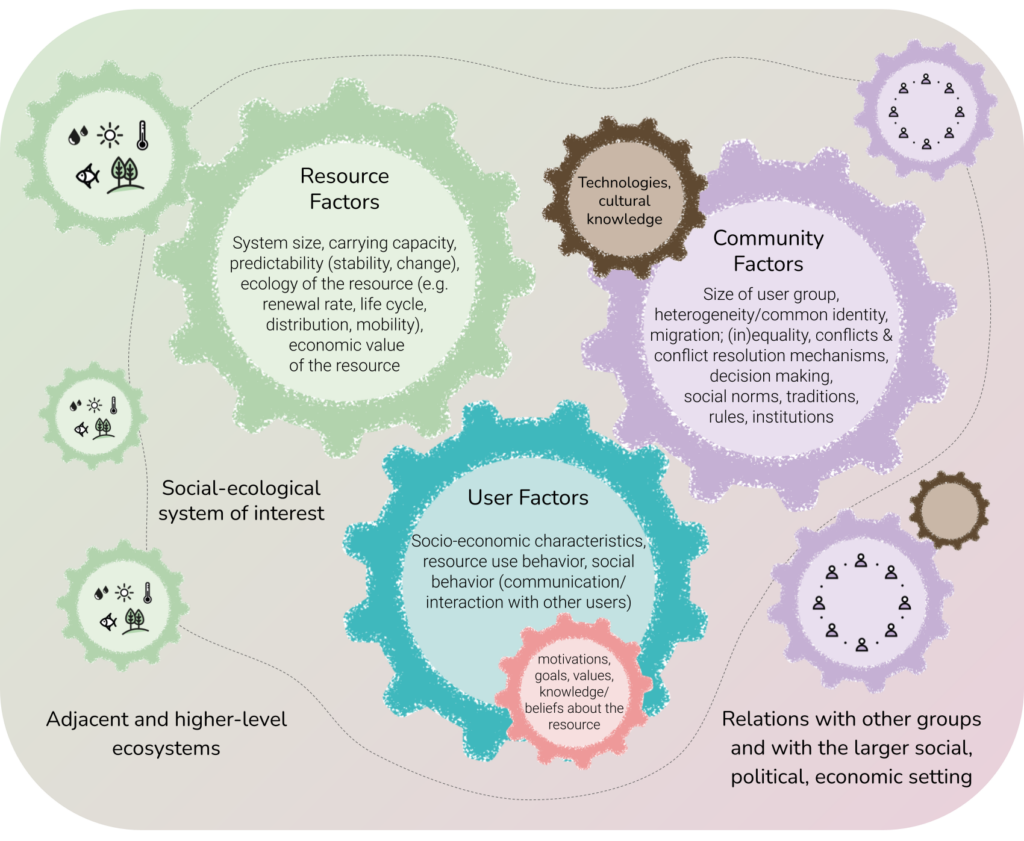
In this lesson, students analyze a select real-world social-ecological system by looking at factors of the resource(s) and ecosystem, resource user behaviors, and governance, to develop recommendations for improving the sustainable management of the resource.
Analyzing social-ecological systems Read More »
Our interdisciplinary teacher’s guide outlines our educational design concept. It provides introductory readings around core concepts of human sciences and ideas for exploring them in the classroom.
A Teacher’s Guide to Evolution, Behavior, and Sustainability Science Read More »
How can we use insights about human evolution, human behavior, and the causal interactions in social-ecological systems to address local, regional and global sustainability issues? How can we use these understandings to solve real world problems?
Sustainable Development Goals (SDGs) Read More »

In a classroom simulation game with changing conditions students develop strategies for the use of a common resource so that the profit for the entire group is maximized.
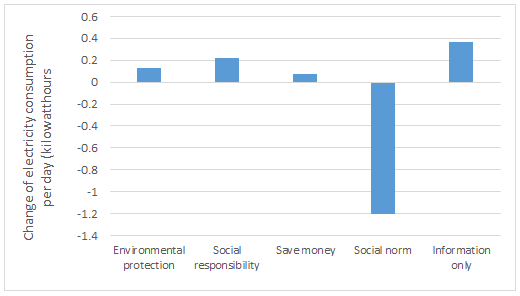
A set of behavioral experiments to find out what motivates people to save electricity, exploring the roles of monetary incentives, social norms, appeals to the environment or to citizenship.
What motivates people to save energy Read More »
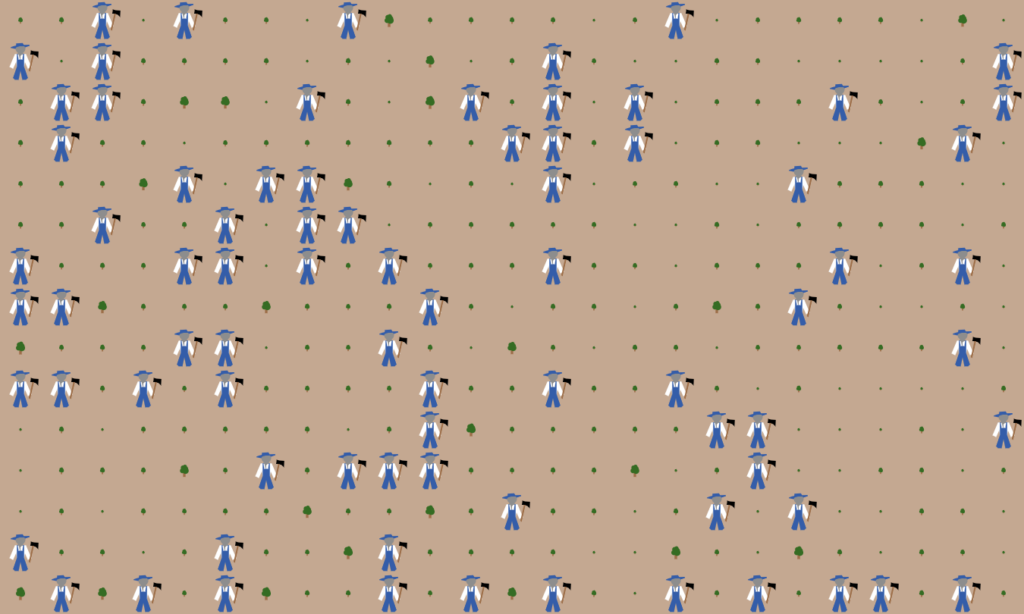
This model allows students to explore the relationships between population size, resource growth rates, cost of living, and resource use rates.
NetLogo: Population size and living costs Read More »