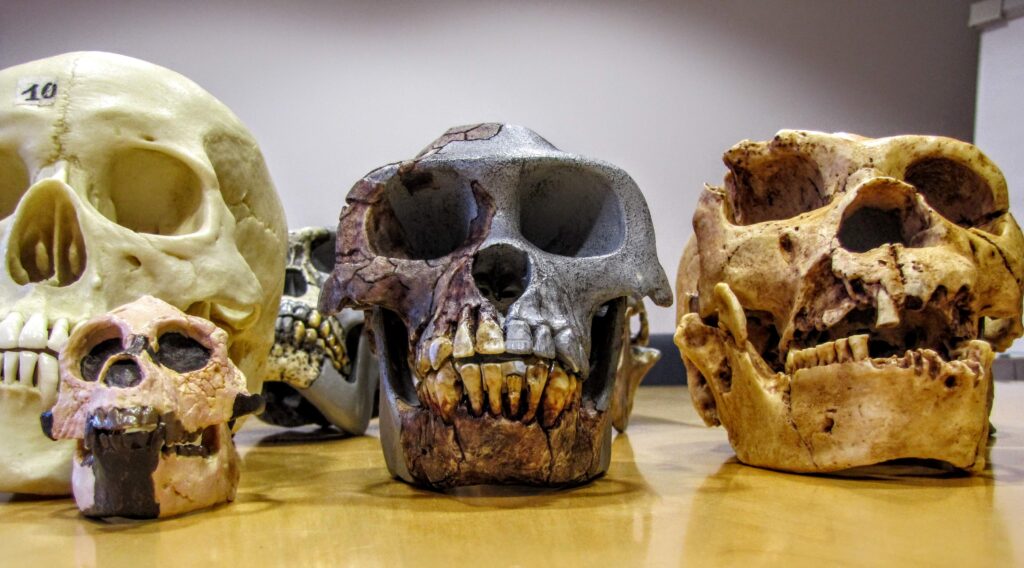
Observing differences in hominin skulls
An activity for students to explore and notice traits on fossil hominin skulls
Observing differences in hominin skulls Read More »

Evolutionary Thinking
An activity for students to explore and notice traits on fossil hominin skulls
Observing differences in hominin skulls Read More »
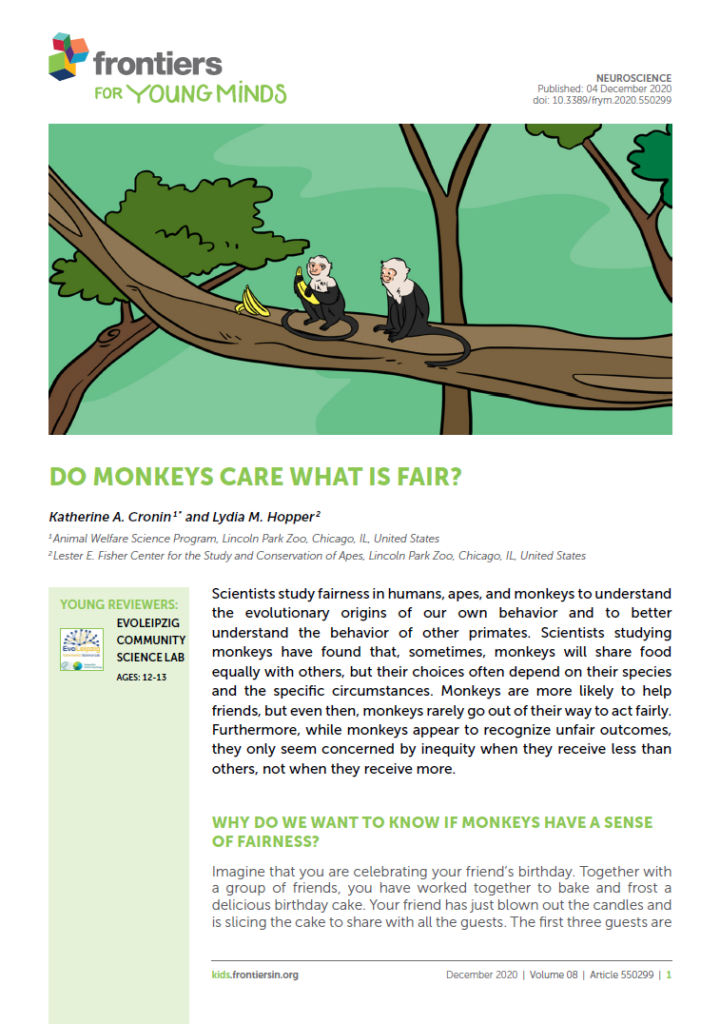
Scientists study fairness in humans, apes, and monkeys to understand the evolutionary origins of our own behavior and to better understand the behavior of other primates. Scientists studying monkeys have found that, sometimes, monkeys will share food equally with others, but their choices often depend on their species and the specific circumstances. Monkeys are more likely to help friends, but even then, monkeys rarely go out of their way to act fairly. Furthermore, while monkeys appear to recognize unfair outcomes, they only seem concerned by inequity when they receive less than others, not when they receive more.
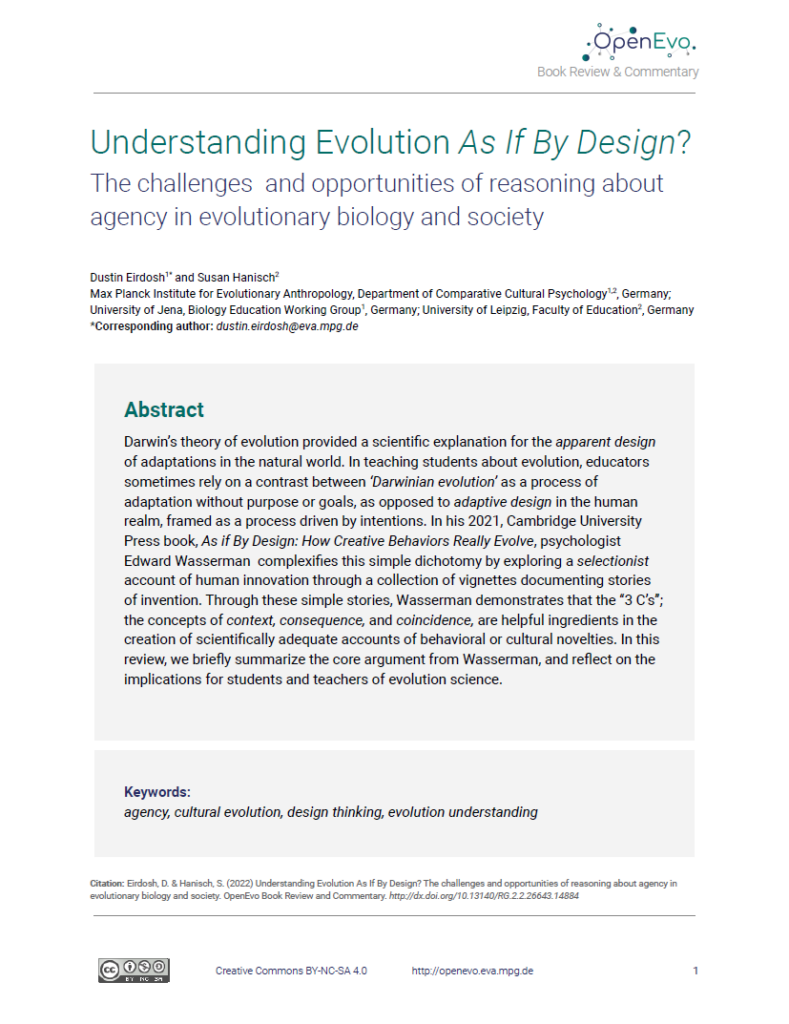
This review and commentary on psychologist Edward Wasserman’s As if By Design provides a brief overview of the core argument from Wasserman, and discusses the implications for evolution science educators and students.
Classroom resources for exploring (the evolution of) human needs, values, and well-being
Human evolution – Human needs, values, and wellbeing Read More »
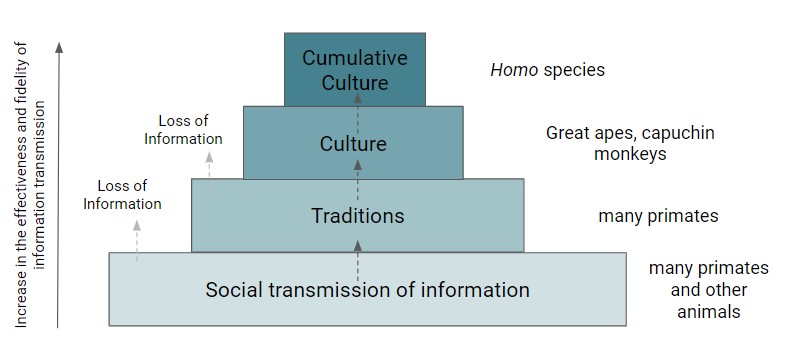
Teaching resources and information about the evolution of cumulative culture
Cumulative culture Read More »
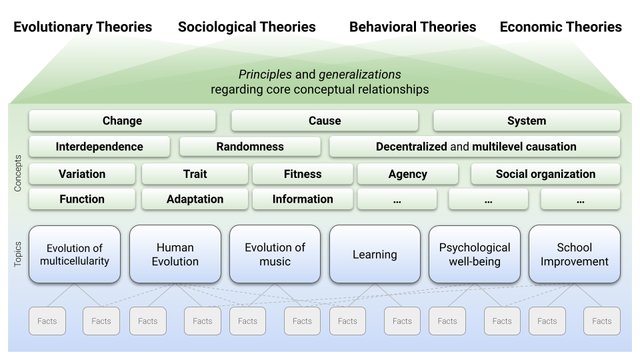
Evolutionary concepts are used, with varying and arguable degrees of scientific utility, across a wide range of disciplines. This contribution explores how understanding the structures of knowledge, or the organization of facts and generalizations in science, cognition, and education, may help illuminate the educational potential and evidence-informed pedagogical practices appropriate for teaching about the interdisciplinary application of evolutionary concepts.
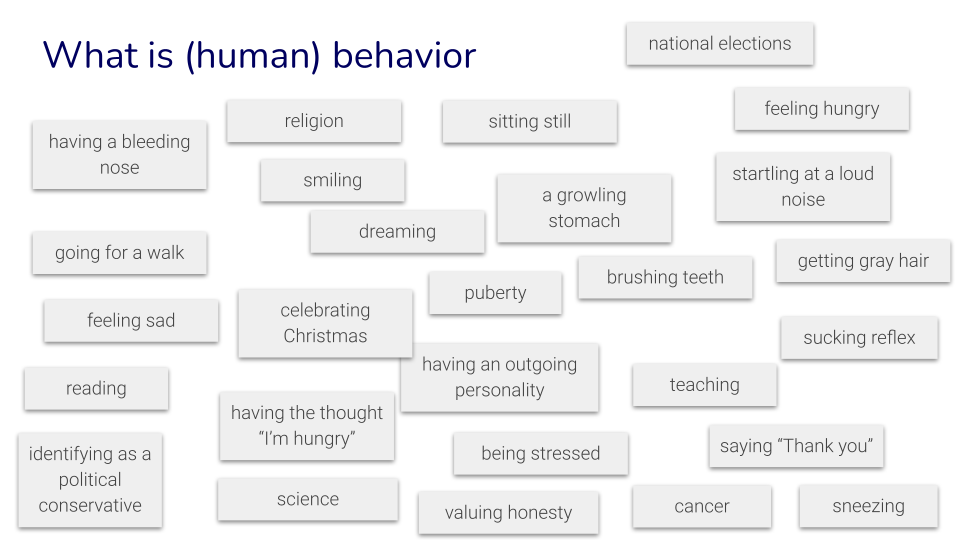
In this lesson students explore the concept of (human) behavior, its causes, and its relation to well-being and sustainable development.
