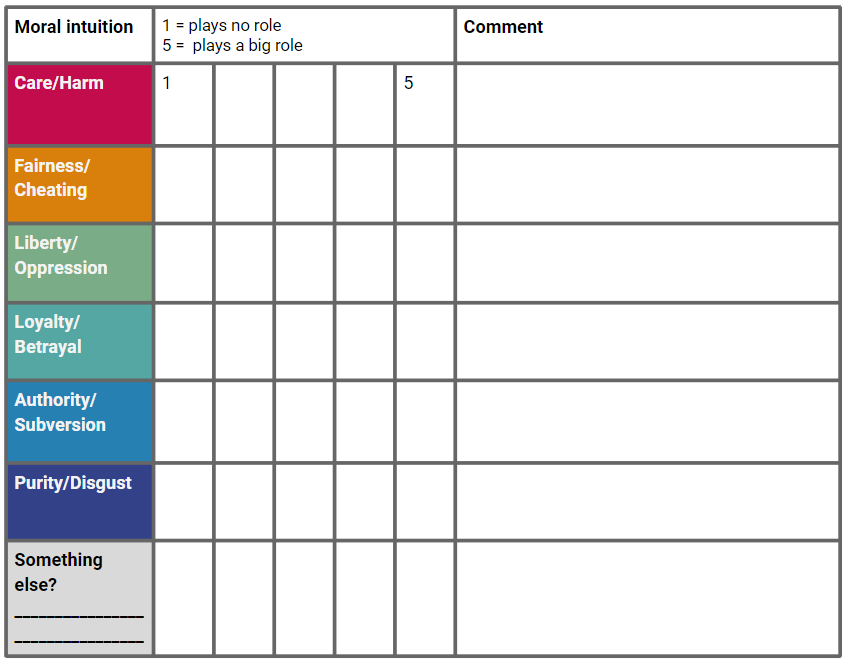
Discussion guide about moral issues
Lesson plan and worksheets to apply understandings of moral psychology in classroom discussions about ethical issues
Discussion guide about moral issues Read More »

Evaluation Competency
Lesson plan and worksheets to apply understandings of moral psychology in classroom discussions about ethical issues
Discussion guide about moral issues Read More »
In this unit students explore stories of people who have left a radical movement, or deliberately discuss with representatives of the “other side” and build respectful relationships. These let us explore the circumstances, experiences and insights about why prejudice, hatred and violence against other people or a group can arise and how they can dissolve again.
True stories of people who left radical movements Read More »
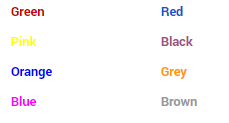
In this lesson students sort their own experience of thinking into fast and slow processes. Based on this, they come to understand that our thinking is shaped through experience such that things we do often and regularly become easier over time.
Fast thinking or slow thinking Read More »
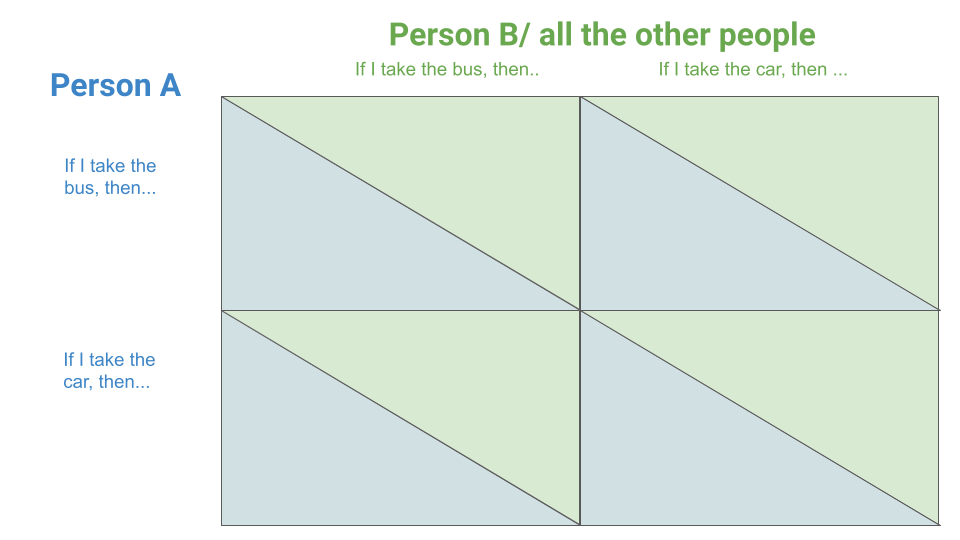
Students reflect on the causes and consequences of human behaviors in situations of social interactions, and are introduced to the payoff matrix as a helpful tool to represent motivations and outcomes of behaviors.
Introduction to social dilemmas and the payoff matrix Read More »
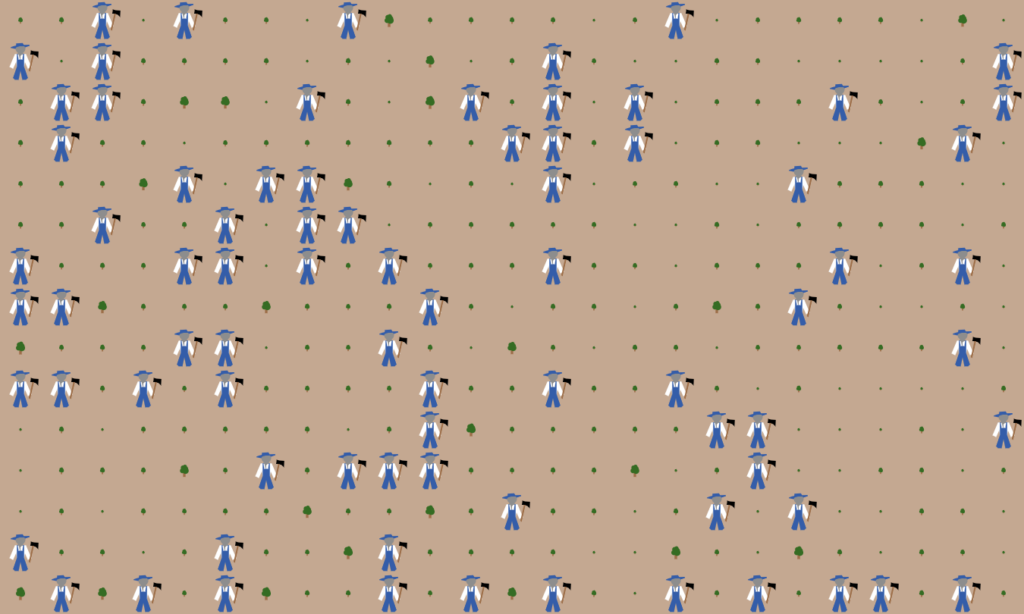
This model allows students to explore the relationships between population size, resource growth rates, cost of living, and resource use rates.
NetLogo: Population size and living costs Read More »
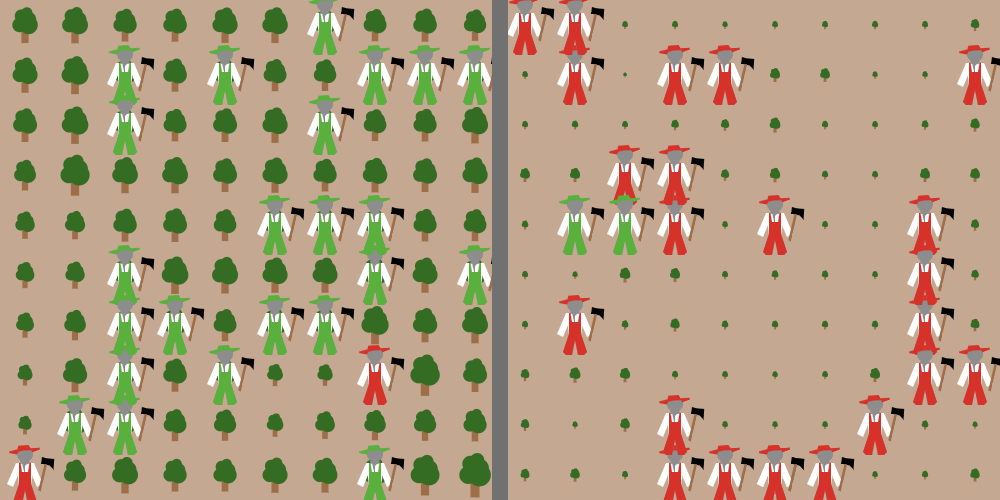
This NetLogo computer model extends the model Two Foresters and introduces a bigger and more complex population structure
NetLogo: Two communities Read More »
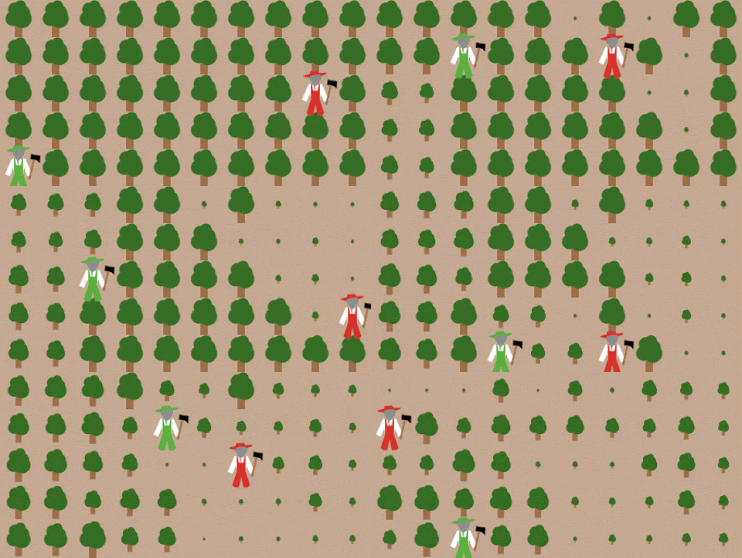
An interactive introduction into concepts of ecology, behavioral ecology, and sustainability with a computer simulation of a simple social-ecological system.
NetLogo: Two Foresters Read More »